
Inburgeringsexamen
The Dutch civic integration exam, explained in plain English
Five exam parts, two different rulebooks depending on when you became required to integrate, and a lot of confusing Dutch abbreviations. Here is what each part actually tests, in plain English, with real practice and a clear next step.
Which Exam Do You Actually Need?
This is the single most confusing part, and most guides skip it. Two things decide which exams you take: the date you became required to integrate (inburgeringsplichtig), and, under the current law, the learning route your gemeente set in your personal plan (PIP). Not your personal preference. Your official letter from DUO, or your account on Mijn Inburgering, states your exact required level. Answer two or three questions below to see what applies to you.
The Five Exam Parts
Where DutchLessonsOnline fits in, honestly
Our Dutch A1 and A2 courses take you from zero to A2 level: the grammar and vocabulary foundation almost every route needs, and the exact level of the exam if you fall under the 2013 law, if your gemeente has lowered your exams to A2 within the B1-route, or if you are taking the exam to naturalise (naturalisation currently requires the inburgeringsexamen at A2 or higher).
If your exam is at B1 level, A2 is not the finish line, it is the running start: you will need further study beyond A2 to close the gap. We do not have a dedicated B1 course yet, and we would rather tell you that plainly than let you assume A2 is enough. We have practice packs for Lezen, Schrijven, Spreken and KNM, each explained in plain English. Our Luisteren exercises are free on this site, with fifteen fragments you can practise right now.
Common questions
Does DutchLessonsOnline prepare me for the whole inburgeringsexamen?
Our A1 and A2 courses build the language foundation the exam's Lezen, Schrijven, Luisteren, and Spreken parts test, up to A2 level. We do not teach B1-level material yet, and we say so rather than overselling what the courses cover. KNM is knowledge rather than language, so we cover it in a separate practice pack instead of inside the courses.
What is KNM and do I need it?
KNM (Kennis van de Nederlandse Maatschappij) tests your knowledge of Dutch society, not your Dutch language skills. Almost everyone doing inburgering needs it, regardless of A2 or B1 route. See our KNM page for what it actually covers.
How do I know if I need A2 or B1?
Check your official letter from DUO or your gemeente, or log in to Mijn Inburgering. It lists the exact exams and level you need. That depends on the date you became required to integrate and, since 2022, on the route in your personal plan (PIP). Within the B1-route, only your gemeente can lower exams to A2, after at least 600 hours of lessons.
Is this the same as the Staatsexamen NT2?
Partly. Under the 2021 law, the B1 language exams in the B1-route and the onderwijsroute are the Staatsexamen NT2 programma I exams (B1 level). The A2 language exams, including those under the 2013 law and after scaling down to A2, are separate DUO exams. Staatsexamen NT2 programma II (B2) is mainly used for higher education and work. KNM, PVT and MAP belong to inburgering only.
Practice Packs, Explained in English
The exam is in Dutch, so the texts, questions and model answers are too. Everything around them — the strategy, the explanations, the reason each answer is right — is in plain English. Self-paced PDFs, one payment, lifetime access.
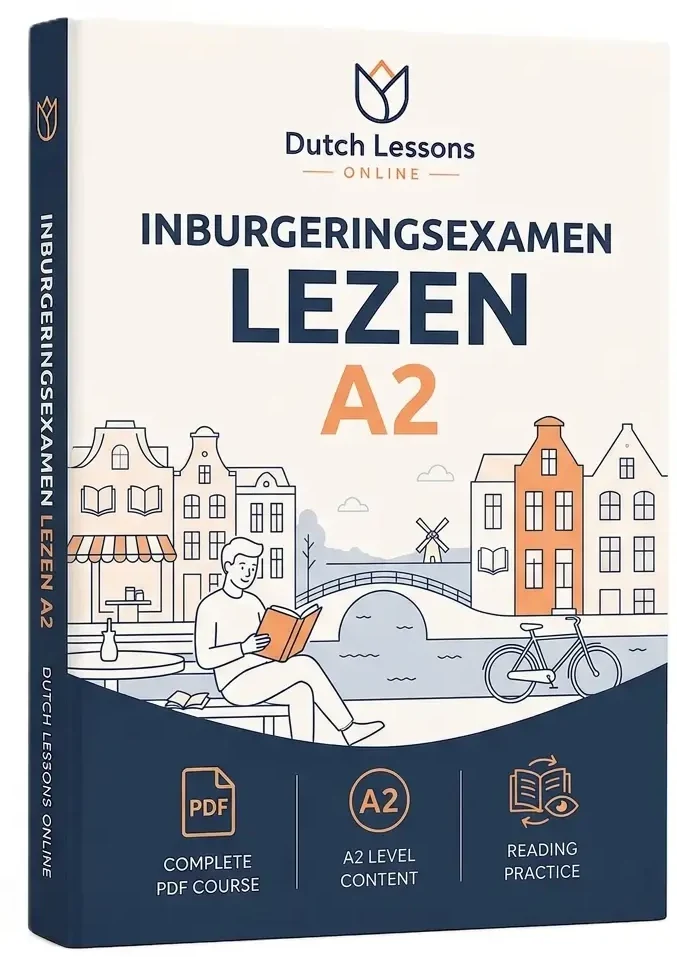
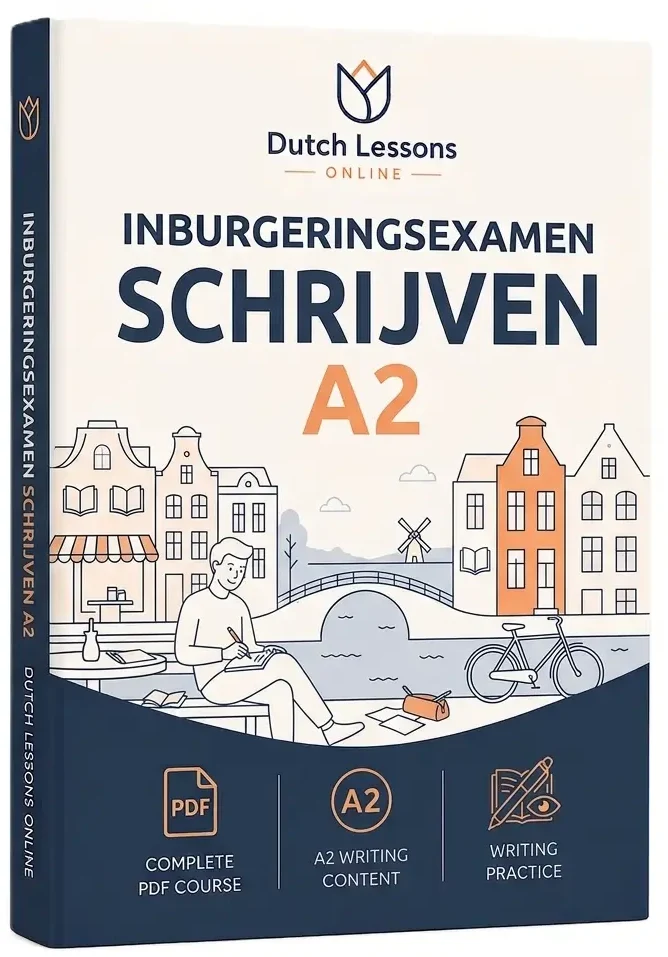
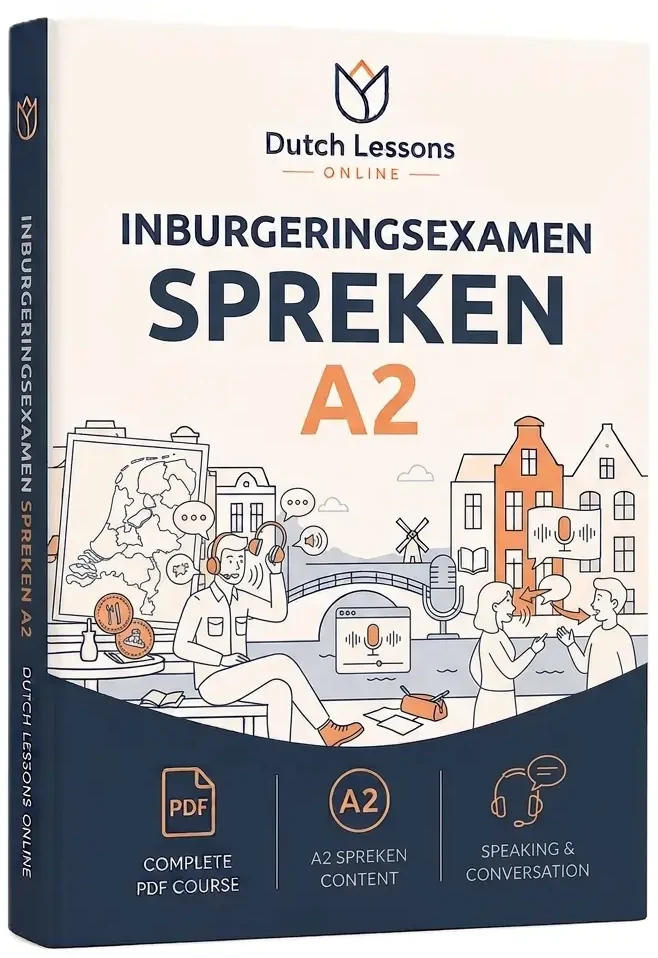
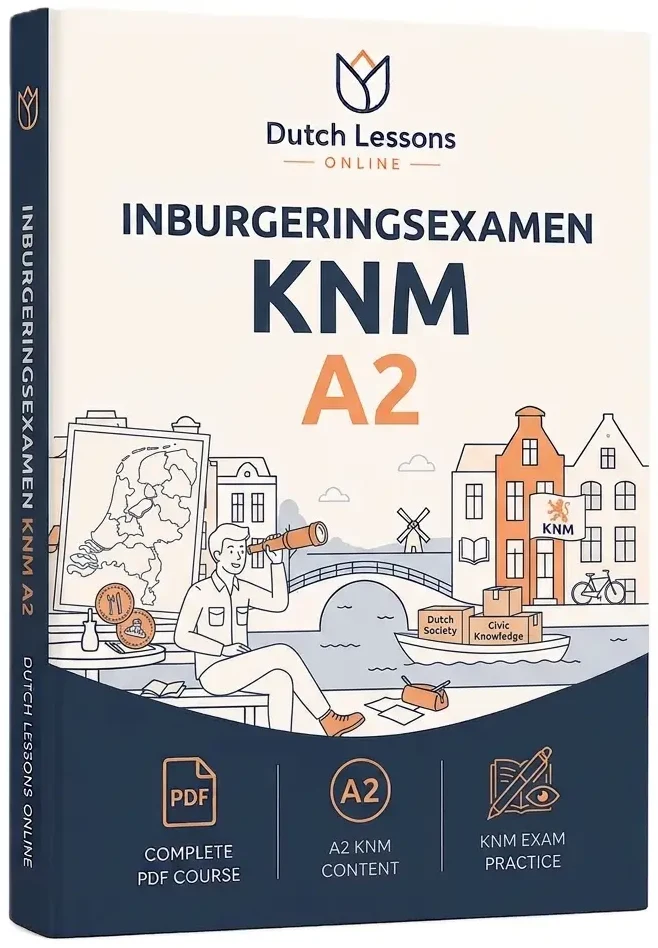
Luisteren is free on this site — fifteen fragments with audio, answers and transcripts.
Build the language foundation first
Whatever level your exam needs, A2 is the foundation everything else builds on. Start from zero with A1, or go straight to the complete course with A2.